orange808 wrote: ↑Wed Jan 14, 2026 3:27 pmLCD can be the right choice for a lot of people. Right now, the tech is both more durable (assuming the rest of the panel's components are well made) and brighter than OLED.
For monitors, yes. For TVs, no. Very very no. RTINGS longevity testing has demonstrated that modern LCD TVs fail at pretty absurdly high rates, enough that they may fail before an OLED would have burned in. And it's not just edge-lit TVs either.
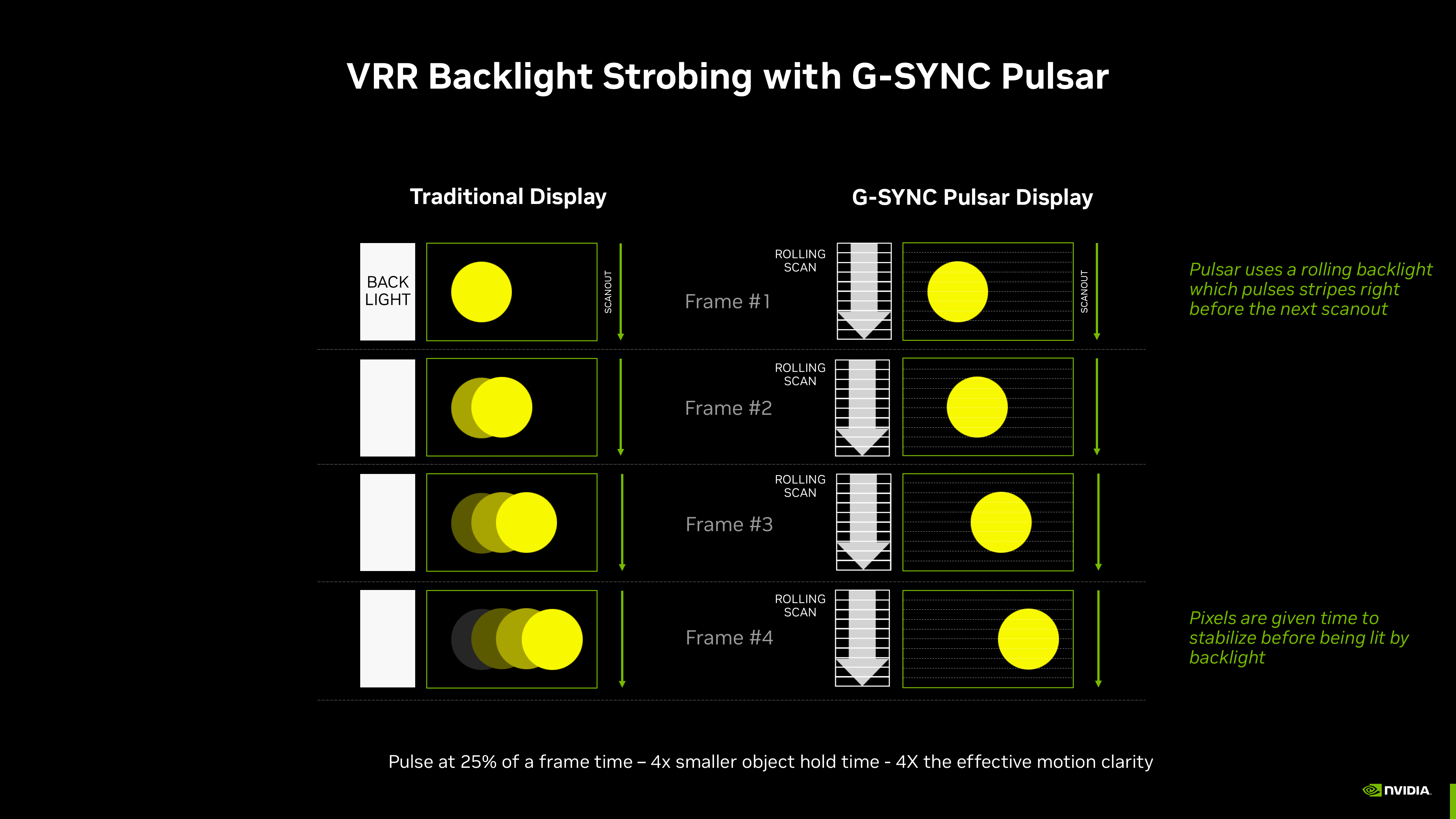
orange808 wrote: ↑Wed Jan 14, 2026 3:27 pmThese new displays are a unique new hardware design? It looks like a lot of horizontal bands (zones) of backlight to me. If that's the case, the panel should exhibit better blacks than current local dimming using the rolling backlight?
Pulsar is not compatible with local dimming, so the perceived black levels will be the same as if Pulsar wasn't used. Because each band of the backlight is being lit much brighter than it otherwise would be so that you don't perceive a drop in brightness versus pulsar being off. So to the eye, it's equivalent to the entire backlight being on at the same time. You'd still need local dimming inside the band to get the improved contrast.
orange808 wrote: ↑Wed Jan 14, 2026 3:27 pmVRR and BFI together sounds interesting. I'm fascinated by the VRR (or variable blanking period tolerance) and rolling/strobing backlight being used together, because that would normally introduce odd flicker and should create changes in the perceived "brightness" of the image when the refresh rate changes? Adjusting for that sounds like a rabbit hole to me. Maybe I'm missing something, but that's what I would expect to see. I recall one monitor attempted BFI and VRR years ago and it got poor marks in reviews.
I don't know exactly what Pulsar is doing, but since they're already clearly driving the backlight waaaaay harder for this to work, they can correct for any perceived changes in brightness by varying the backlight intensity with the scanout speed. I know that the complexity of managing this for OLED panels on a per-subpixel and per-frame basis is why no mobile (phone, tablet, laptop) OLED display supports VRR. They all fake it in various ways. In the case of phones, by just switching between a small number of pre-defined refresh rates that they've pre-calculated all the PWM tables for, and in the case of laptops by pretending that a high refresh rate panel is a VRR display (a laptop might have a 960 Hz display that pretends to be a 240 Hz display so that the differences in frame times and pacing aren't noticeable). So maybe that's why they're requiring GPU-side support for this, to do the calculations. That said, I'd expect the calculations for this to be dramatically simpler than for an OLED, because instead of per-subpixel, you only need to do it per backlight band, and the image brightness wouldn't matter...