I've been waiting for this for some time now and just got an email that the first units are available NOW.
It's got a HDMI output, but using a HDFury and maybe a scan converter we should be able to use this will all kinds of digital displays, analogue CRTs or even video processors.
projector measurement could turn out tricky, since you'll block the light from the point of measurement. You might need a piece of tinted glass or plexi and measure "from behind".
The great thing for me is that I should be able to test the lag on all the upscalers I review without using extensive and complicated CRT dual screen setups...
In general *the* argument for this one is that you can take it a show floor full of TVs and test them all within a few minutes. No more waiting for reviews and such...
Darn I really wanted one of these but will have to wait until the new year now, several unexpected expenses including an unwelcome DVDO Edge repair. Do let us know how well they work though.
actually, of course this is some proper professional gear, but i'm thinking if it wouldn't be possible to make something similar a bit more low budget.
as far as i understand the device outputs some high-speed flashes to the screen which feeds some optical sensor (you can see it in the picture of the back of the device, in the opening) and it measures the delay between those.
i don't think it should be very hard to make something similar with an arduino and an opto-sensor. question is just if the arduino would cope with the speed of these measurements.
Fudoh wrote:projector measurement could turn out tricky, since you'll block the light from the point of measurement. You might need a piece of tinted glass or plexi and measure "from behind".
Wouldn't holding it in the direction of the projector in an otherwise dark room count?
Very neat piece of equipment, will love to see this in use in more reviews about monitors and televisions.
Thanks for the notification on this product. Ive been watching for Leo's product for many months. As someone mentioned above, its not listed as such right now, at least the project has/is moving along.
It's only shipping with standard UK mail, since there were issues with the paypal checkout (the process had me pay before I even could pick a delivery method). And UK mail isn't this fast. I'm expecting it after the holidays.
Sorry to hear about your Edge. What's the problem ?
Well, there was this bang sound and then, it stopped recognising any signals on any of the HDMI inputs, though analogue was working fine. They wanted £260 ish to repair it so in the end I just got a reconditioned Edge Green with 1 year warranty instead.
On topic - this does work for CRT units? It would be very interesting to figure out if there is lag, and if so how severe, on HD CRTs when using different inputs, as well as looking at the various upscaler options as suggested.
matrigs wrote:i don't think it should be very hard to make something similar with an arduino and an opto-sensor. question is just if the arduino would cope with the speed of these measurements.
I think the bigger question is how the Arduino would generate the video signal. A moderately overclocked AVR can bit-bang standard-def, but that would limit you to analog inputs.
matrigs wrote:i don't think it should be very hard to make something similar with an arduino and an opto-sensor. question is just if the arduino would cope with the speed of these measurements.
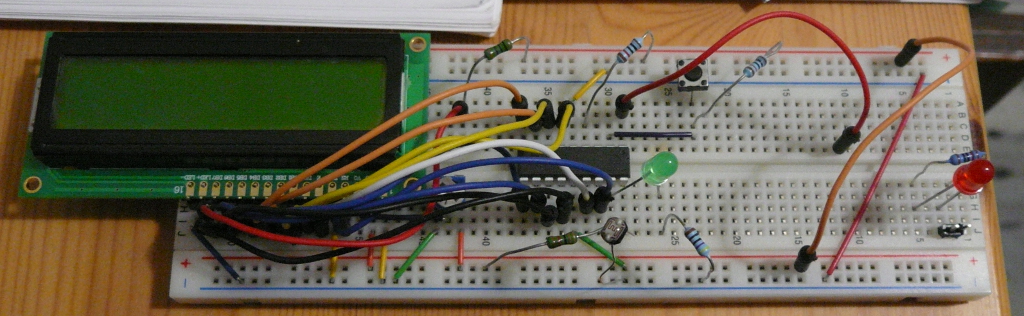
I built a system working on the same principle a few years back from PIC16F88, photoresistor and LCD display. The input signal is generated by PC and the result is shown on the LCD display. It naturally works with analog sources only, but is quite simple and cheap to build as can be seen here.
Ed Oscuro wrote:On topic - this does work for CRT units? It would be very interesting to figure out if there is lag, and if so how severe, on HD CRTs when using different inputs, as well as looking at the various upscaler options as suggested.
I'm interested in something like that too. Fudoh mentioned using scan converters and the HD Fury. I want to know what kind of lag is on my VGA, HDMI, Component inputs, and also on my scaler as well.
I have the stuff on hand, so it's easy. And even if there's additional lag with a HDFury or the scan conversion, it's easy to calibrate if you have a lag-free CRT to benchmark the "processing chain".
The HDFury converts from HDMI to VGA or component without changing the resolution. I don't know what the Lagtester does actually output. 480p, 720p or 1080p I guess, so the HDF alone allows for testing the VGA and component inputs already. With an Extron VSC unit I can convert VGA to SD composite, s-video, RGBs or component, so I can test all the upscalers I have as well.


 ? I'm pretty sure you will receive it this week.